Armenian Cuisine · 5 min read
Lavash: The Bread That Brings People Together Around One Table
Lavash looks simple: a thin sheet of bread you can wrap around cheese and fresh herbs. Yet that very simplicity holds a craft, a family ritual and a flavour without which the Armenian table is hard to imagine.
What lavash is and how it differs from ordinary bread
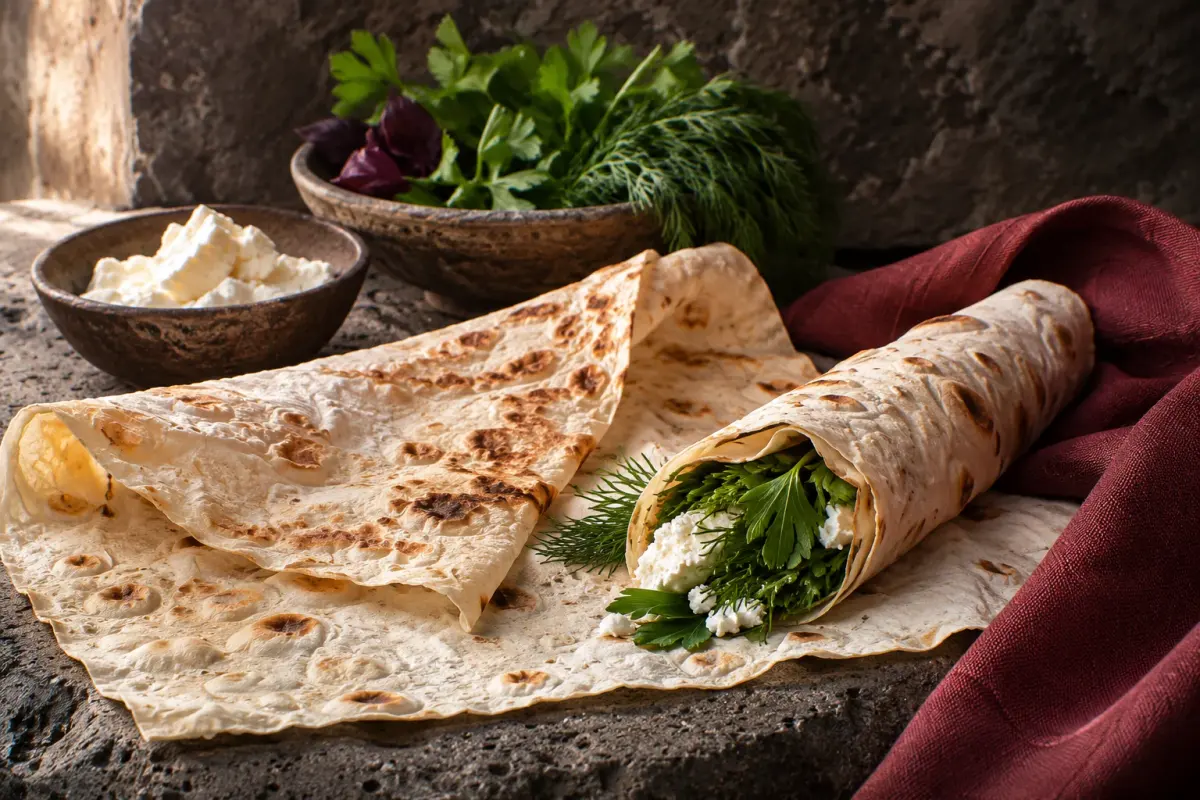
Armenian lavash is a thin wheat bread baked against the wall of a hot clay tonir. The soft sheet folds easily, so it serves at once as bread, as a wrap for food and as part of the table setting. Fresh lavash has a tender, elastic texture; dried lavash keeps longer and can be lightly moistened before serving.
The essence of the bread lies not in a complex recipe. As described by UNESCO, the dough is made from wheat flour and water, then rolled and stretched into a thin sheet. The real skill lies in the movement of the hands, the thickness of the sheet and the precise moment when the bread must be lifted from the oven wall.
How a sheet is born: from dough to tonir
Making lavash takes rhythm. The dough is divided into pieces, rolled out and carefully stretched. The sheet is then laid on a special oval cushion and, with one swift movement, pressed against the inner wall of a heated tonir. After a short time it is lifted off with a long tool. Wait too long and the bread dries out; rush it and it won't have time to set.
That is why watching lavash being baked is often more fascinating than simply seeing the finished stack. One person prepares the next sheet, another tends the oven, a third stacks the hot sheets. UNESCO emphasises that this shared work passes skills down through generations and strengthens bonds within the community. In 2014, lavash, the preparation, meaning and appearance of traditional bread as an expression of culture in Armenia, was inscribed on the Representative List of the Intangible Cultural Heritage of Humanity.
Why lavash matters at the festive table
Lavash appears at everyday lunches and at large family occasions alike. UNESCO's description mentions a wedding custom: the bread is laid on the shoulders of the newlyweds as a wish for prosperity. Its meaning goes beyond a single rite. Bread made together and shared at the table expresses hospitality without the need for long speeches.
For travellers, it helps to remember that lavash is not a decorative side to the main course. It is ideal for gathering up herbs and cheese, picking up a piece of meat or vegetables, and sometimes for making a simple snack from whatever is already on the table. That is why it is best appreciated not on its own, but together with food and conversation.
What to try lavash with in Gyumri
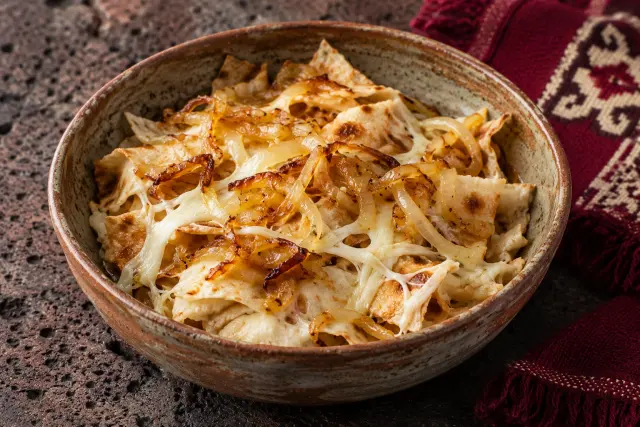
Start with the simplest pairing: cheese, fresh herbs and lavash. Then try it with vegetables or meat cooked over an open fire. This order lets you taste the bread itself before spices and sauces take over. If you find cheese panrkhash on the menu, you'll see another use for lavash: there, dried pieces become the base of a warm dish.
In Gyumri it is especially interesting to compare soft and dried sheets: the texture changes how familiar ingredients taste. For current availability of dishes, please check the up-to-date Parvana Ojakh digital menu; this article describes the tradition and does not promise specific dishes at the restaurant.
Short on time: three things worth remembering
- Lavash is a thin bread made from simple ingredients; the mastery shows in the stretching and baking in the tonir.
- UNESCO has recognised the tradition of making it in Armenia as Intangible Cultural Heritage.
- Try lavash both soft and dried: with cheese, herbs or in Shirak-style panrkhash.
If you're buying lavash to take away, ask how to store it: fresh and dried sheets need different handling. Don't leave soft bread exposed to the air if you want it to stay pliable. For a picnic, it's easier to prepare the filling separately in advance and wrap the lavash just before eating. That way the bread won't go soggy, and the herbs and cheese will taste fresh. It's a small practical detail that makes getting to know the tradition all the more enjoyable.
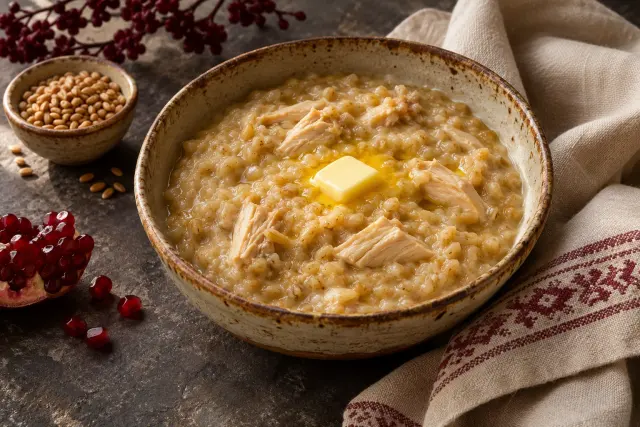
Bread is an easy way to begin exploring Armenian cuisine. From there, move on to dishes that gather just as many people around the table, such as harissa.
Sources and editorial note
Facts about culture and places have been checked against the sources listed. Illustrations were created for this article and do not depict the restaurant's dishes or an exact documentary scene.