Taste of Shirak · 5 min read
Panrkhash: Gyumri's Cheesy Character in One Bowl
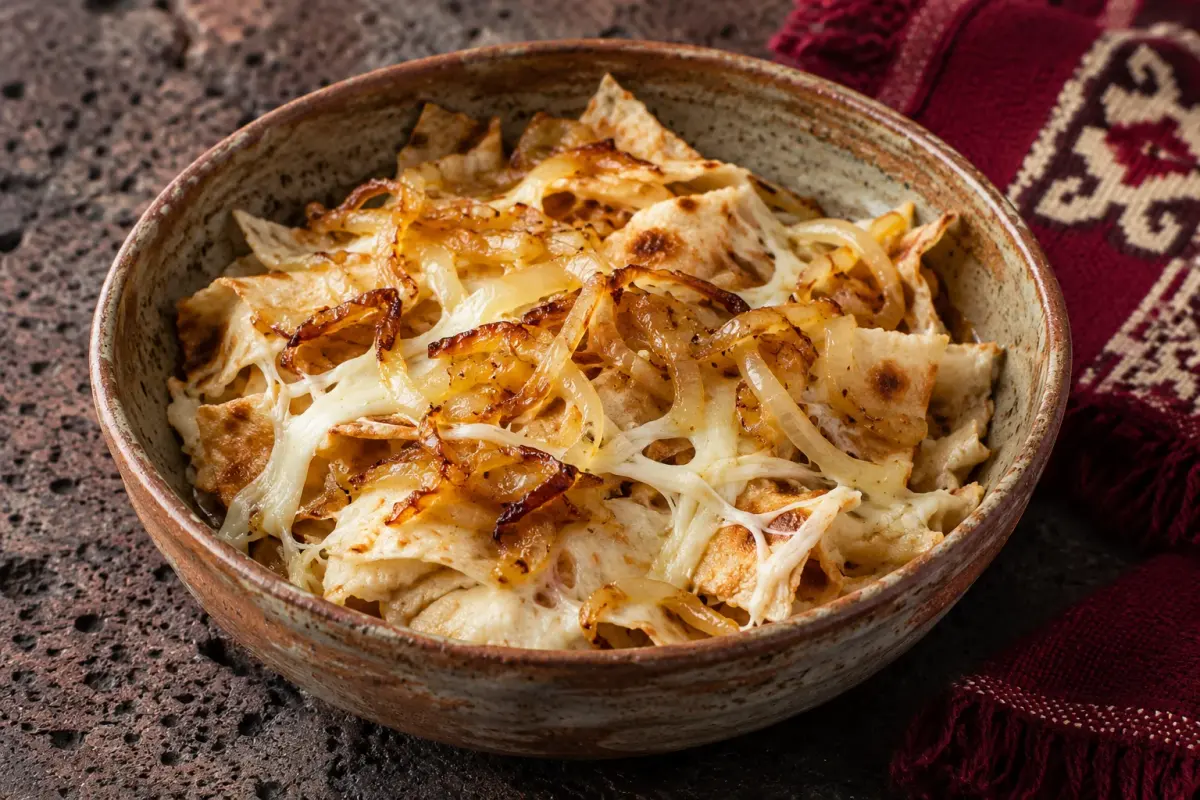
Every city has a flavour that brings back a trip better than any souvenir. For Gyumri, that flavour might well be panrkhash: dried lavash, local chechil cheese, hot water and onions fried in butter come together into a remarkably complete dish.
What panrkhash is
Panrkhash is a dish typical of Armenia's Shirak Province, home to Gyumri. In the traditional version, pieces of dried lavash are combined with local chechil cheese, hot water is added, and the dish is finished with onions fried in butter. The result is rich, soft and stretchy, and it is best eaten as soon as it's made.
The name turns up in several transliterations: panrkhash, panrkash, and sometimes "cheese khash". We use "panrkhash" to keep the familiar sound. The Armenian tourism portal links it specifically to Shirak's chechil cheese and recommends trying it in Gyumri.
Why chechil matters in this dish
Chechil is a stretched-curd cheese with a stringy texture and a distinctly salty flavour. In panrkhash it shapes both the character of the dish and its texture. Hot water softens the dry bread, the cheese binds the layers, and the golden onions add a sweetish depth. Take away any one of these elements and the impression changes noticeably.
The dish reveals a very practical side of home cooking: familiar ingredients are used so that nothing goes to waste. Dried lavash here is not a compromise but an essential base. It absorbs liquid differently from fresh lavash and doesn't immediately turn into a uniform dough. That's why panrkhash can't be fully understood from a list of ingredients alone.
How it's served and when to eat it
Panrkhash needs no elaborate presentation. It is served hot, often in a deep bowl, while the cheese is still stretchy and the onions smell of butter. It's a filling dish, so it works well as a main lunch after a walk. If you're sharing several dishes among a group, start with a small portion so you can appreciate the flavour at your own pace.
As described by the Armenia Travel portal's page on Shirak, panrkhash is a local tradition worth seeking out in this region in particular. The way it's served varies from family to family and from kitchen to kitchen. So it's more interesting to compare how the cheese, the lavash and the browning of the onions change than to look for a single "definitive" version.
Are panrkhash and khash the same thing?
No. The similar-sounding names are confusing. Classic khash is a long-simmered meat broth, traditionally eaten with garlic and dried lavash, often in the morning during the cold season. Panrkhash is built around cheese, bread and onions. It is a dish in its own right, not simply a lighter version of khash. It is sometimes called vegetarian in comparison with khash, but it contains dairy and butter, so it's worth checking the exact ingredients when ordering.
In Gyumri it's easy to get to know both names without arguing over their origins: one tells of winter feasts, the other of Shirak's cheese cuisine. If you love dishes with a clear regional identity, panrkhash deserves its own stop on your food itinerary.
What else to try after panrkhash
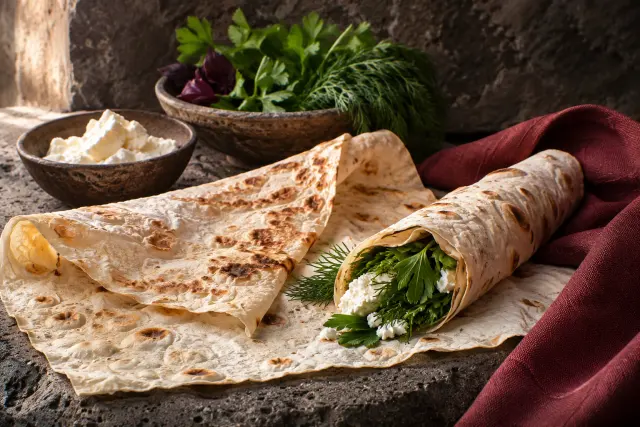
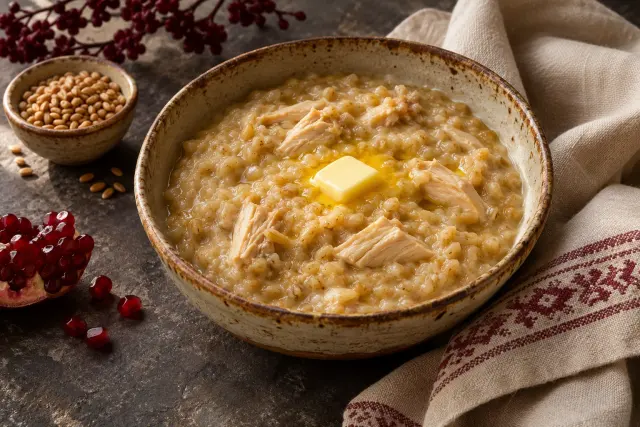
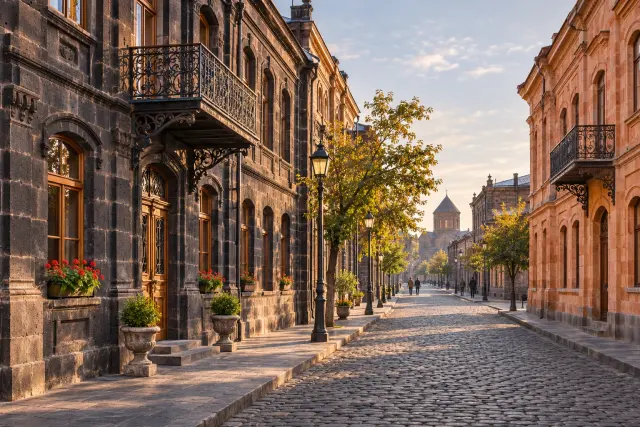
To see the breadth of the Armenian table, compare panrkhash with harissa: harissa also has a wheat base, but its texture and the role of meat are entirely different. Then try fresh lavash with cheese and herbs to experience the same bread in another form. After lunch, leave time for a stroll around Kumayri: the contrast between warm food and the cool stone city stays with you for a long time.
If you're travelling as a group, panrkhash works well placed in the centre of the table so everyone can compare impressions: some notice the salty cheese first, others the sweetness of the onions, and others prefer the soft bread. Ask about the particular way it's prepared wherever you eat it. You'll learn more about the local cuisine this way than from a generic list of the "ten best dishes". And remember that the cheese makes this dish unsuitable for anyone avoiding dairy.
Before your visit, take a look at the Parvana Ojakh digital menu and check what's currently available. We're writing about a regional dish, not confirming that it is always available at the restaurant.
Sources and editorial note
Facts about culture and places have been checked against the sources listed. Illustrations were created for this article and do not depict the restaurant's dishes or an exact documentary scene.