Armenia · 5 min read
Ararat: A Mountain Across the Border, an Image Always Close at Hand
Ararat holds a special place in the Armenian landscape and imagination. Its snowy peaks are visible from the country, yet the mountain itself lies on the other side of the state border. It is this blend of closeness and inaccessibility that makes seeing it so powerful.
Where is Mount Ararat?
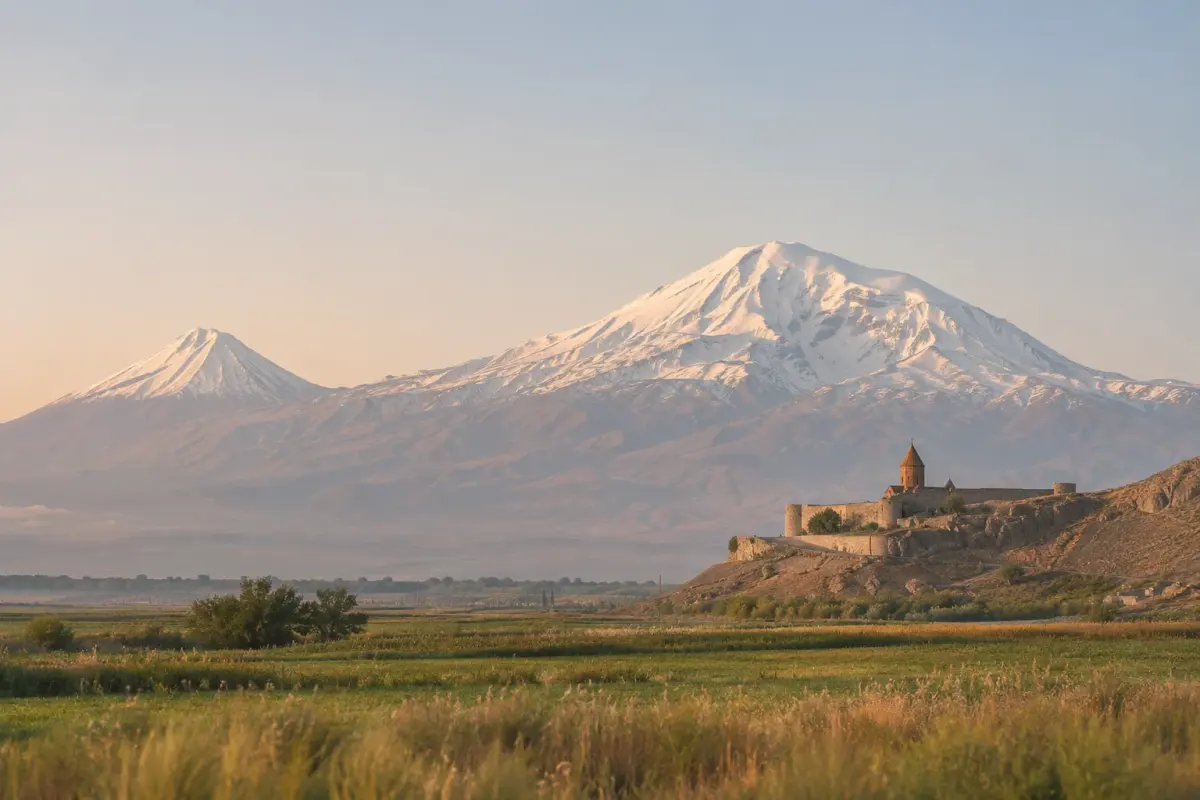
Mount Ararat is located in present-day Turkey, near the borders with Armenia and Iran. Even so, on a clear day its silhouette can be seen well from the Ararat Valley in southern Armenia. Here the geographical answer and the cultural meaning differ: the mountain is not in Armenia, yet it remains one of the central symbols of Armenian identity. This is noted directly by Armenia's official tourism portal.
The massif is recognisable by its two peaks: Greater and Lesser Ararat. They are often photographed together, though the perspective shifts depending on the viewpoint. That is why the same landscape can look solemn and almost graphic in the morning, and soft, dissolving into the haze towards evening.
How high is Ararat?
Greater Ararat stands at about 5,137 metres above sea level. This is the figure given by the Armenia Travel portal. Lesser Ararat is lower; travel accounts sometimes cite different figures depending on the source of measurement, so for a quick reference it is enough to remember the height of the main summit.
Its height explains why the snowy summit can stay visible even when the valley is already warm. But clear air matters just as much: clouds and haze can hide the mountain completely. If you are travelling for the view, don't build your whole day around a guaranteed shot. It is better to choose a route that will be rewarding even without perfect weather.
Why Ararat matters so much to Armenia
Ararat appears in Armenia's art, stories and everyday imagery. The mountain is visible from the country and is historically bound up with its cultural memory, despite the present-day border. For first-time visitors, it is important not to reduce it to a "photo spot". The view of the mountain is part of understanding how geography and history can coexist within a single landscape.
Conversations about Ararat often recall the biblical story of Noah's Ark. This is a religious and cultural tradition, not a confirmed archaeological site. Separating legend from geographical fact is worthwhile: the image of the mountain becomes richer, and the story more accurate.
Where to see Ararat in Armenia
The classic viewpoint is Khor Virap Monastery in Ararat Province. It is often photographed against the mountain: the ancient walls form the foreground while the peaks rise beyond the valley. Armenia Travel recommends this spot for views and photography in clear weather. Ararat can also be seen from Yerevan, but the angle and the haze change the impression.
It is best to go without counting on a "guaranteed view": check the forecast, choose a clear morning and allow extra time. A good shot depends not only on light and clear air, but also on patience. Sometimes a cloud covers the summit for a few minutes, and then the whole landscape opens up.
Can you combine Ararat with a trip to Gyumri?
Yes, but they are different parts of the journey. Gyumri is in Shirak, northwest of the Ararat Valley; Khor Virap lies south of Yerevan. We would not promise a view of Ararat from a room in Gyumri: we have no confirmation of that. It makes more sense to set aside a separate day for the valley, and for Gyumri — a route of its own, with architecture, museums and local cuisine.
In practice, this also means a different rhythm to each day. At the viewpoint, it is worth waiting for the light and spending time outdoors; in Gyumri, the best route is made up of short walks between streets and stops inside museums. Don't squeeze both places into one rushed excursion for the sake of two photos. A few unhurried hours in each will give you a much deeper understanding of the country and leave room for an unexpected encounter or conversation.
If your trip is longer than a weekend, the combination is especially rewarding: one day for Gyumri's stone streets and the taste of Shirak, another for the open expanse of the Ararat Valley. Before setting off, check the weather, opening hours and travel conditions. A landscape stays with you best when you have given it time.
Sources and editorial note
Facts about culture and places have been checked against the sources listed. The illustrations were created for this article and do not depict the restaurant's dishes or an exact documentary scene.